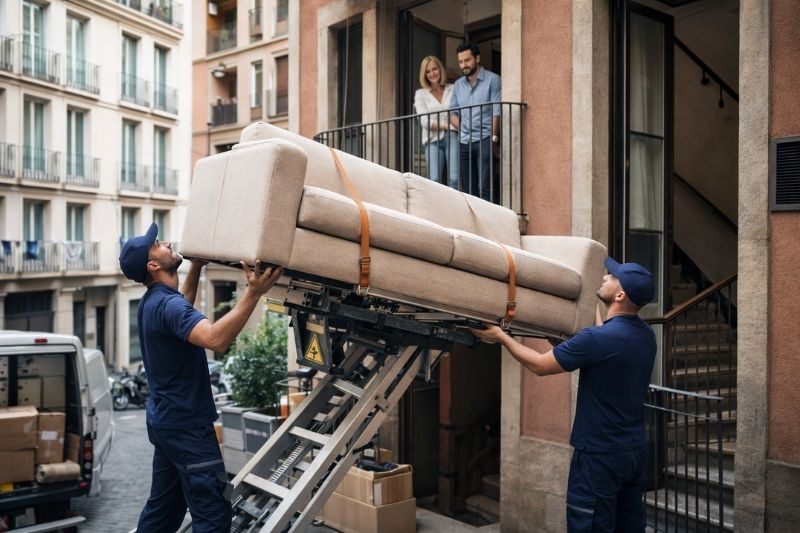
Why Furniture Delivery in Spain Is Different Than the U.S.
Many Americans assume that once their furniture has made it across the Atlantic, the hard part is over. Shipping feels like the big hurdle, and delivery is expected to be the familiar final step.
In Spain, it often works the other way around.
Furniture delivery is where most surprises happen, not because anything has gone wrong, but because homes, buildings, and access are designed differently than in the United States. Furniture that shipped without issue can suddenly feel challenging once it needs to be moved inside a Spanish apartment or house.
This guide explains why furniture delivery in Spain feels different, what Americans tend to notice most, and how understanding those differences ahead of time can prevent frustration on delivery day. The goal is not to discourage shipping furniture, but to align expectations with reality so delivery feels manageable rather than stressful.
U.S. Furniture Is Built for Different Spaces
The biggest reason furniture delivery feels different in Spain starts long before the truck arrives. It begins with how furniture is designed and where it is typically used.
In the U.S., homes tend to have wider hallways, larger rooms, and straighter access paths. Furniture is often built with those dimensions in mind. Sofas are deeper, dining tables are wider, and bedroom furniture is designed to move easily through broad doorways and staircases.
In Spain, especially in apartments and older buildings, space is organized differently. Hallways are narrower. Staircases turn more tightly. Doorways may be smaller, and ceiling heights can vary. None of this is unusual, but it changes how furniture moves once it arrives.
What surprises many Americans is that square footage alone does not tell the whole story. A room may technically be large enough for a piece of furniture, but the path to get it there is what matters. Delivery challenges are often about angles, turns, and clearance rather than floor space.
This is why furniture delivery in Spain requires more adaptation than many people expect. It’s not that furniture doesn’t belong in Spanish homes. It’s that it has to move through spaces that were never designed with oversized furniture in mind.
One-Piece Furniture vs Modular Furniture in Spain
Another key difference Americans encounter during delivery is how furniture is constructed.
Many U.S. furniture pieces are built as large, single units. Sectional sofas, solid wood bed frames, armoires, and dining tables often arrive as one substantial piece. In American homes, this usually isn’t an issue. In Spain, those same items can be much harder to maneuver.
Modular furniture tends to perform better in Spanish homes. Pieces that break down into smaller components are easier to carry up staircases, navigate tight turns, and reposition inside apartments. This doesn’t mean one-piece furniture can’t be delivered, but it does mean delivery may require more creativity and physical handling.
This difference is one of the reasons some Americans feel surprised on delivery day even after carefully deciding what furniture to ship. The decision to ship furniture and the reality of delivering it are closely connected, but they are not the same thing. If you’ve already explored how furniture choices affect life after arrival, this delivery perspective adds another layer to those decisions without repeating them (https://www.movertospain.com/international-moving-to-spain/).
Understanding how furniture construction affects delivery helps reframe expectations. Delivery is not about whether an item fits on paper. It’s about whether it can move safely and practically through the space that leads to its final place.
Staircases, Tight Turns, and the Reality of Vertical Carrying
Once furniture leaves the truck, gravity and geometry take over.
In many Spanish buildings, especially apartments, staircases play a much bigger role in furniture delivery than Americans expect. Stairwells can be narrower, steeper, and more angular, with landings that leave little room to pivot large items. Even when elevators exist, staircases are often the primary route for oversized furniture.
This is where delivery in Spain feels most different from the U.S.
American furniture is frequently moved horizontally, guided through wide halls and straight staircases. In Spain, furniture often has to be carried vertically, tilted, rotated, or maneuvered through tight turns between floors. These movements are routine for experienced crews, but they can surprise homeowners seeing them for the first time.
What matters most in these moments is patience and precision. Delivery crews slow the process down, reassess angles, and protect both the furniture and the building. Progress may look less efficient than a U.S. move, but it is deliberate and controlled.
For Americans, understanding this ahead of time prevents unnecessary concern. Vertical carrying is not a workaround. It is a standard part of furniture delivery in Spanish apartments and older buildings.
Assembly and Reassembly Expectations in Spain
Another difference Americans often notice is how furniture is handled once it reaches the apartment.
In the U.S., many people are used to furniture arriving largely intact, with minimal adjustment needed after placement. In Spain, disassembly and reassembly are more common parts of the delivery process, especially for larger items.
Furniture may be partially disassembled to navigate staircases, tight turns, or doorways. Bed frames, wardrobes, and large tables are common examples. Once inside, items are reassembled so they function as intended in the space.
This process is not a sign that something went wrong. It is a practical response to the realities of Spanish buildings.
What can feel different for Americans is the expectation around timing and completeness. Delivery day focuses on safe placement and basic reassembly, not perfect staging. Fine adjustments, final positioning, or aesthetic tweaks often happen later, once you’ve lived in the space and understand how you want to use it.
Knowing this in advance helps reset expectations. Furniture delivery in Spain is about adaptability and care, not speed or showroom perfection.
Why Some Furniture Is Harder to Deliver Than Ship
One of the most surprising realizations for Americans is that furniture can be easy to ship internationally but difficult to deliver locally.
Shipping is largely about protection, documentation, and transport. Furniture is packed, secured, and moved in controlled environments. Delivery, on the other hand, is where furniture meets real-world constraints. Doorways, staircases, ceiling heights, and turning angles suddenly matter more than weight or distance.
Certain pieces are especially prone to delivery challenges. Oversized sofas, solid wood wardrobes, large headboards, and one-piece dining tables often ship without issue but become complicated once they need to move through a building. The issue is rarely strength. It is shape, rigidity, and limited flexibility.
This is where expectations can clash with reality. On paper, a piece may fit the room perfectly. In practice, the path to that room may be the limiting factor. Experienced movers anticipate this difference and plan delivery strategies accordingly, but for homeowners seeing it unfold, the contrast can be unexpected.
Understanding this distinction ahead of time changes how Americans think about furniture delivery. The question shifts from “Will it arrive safely?” to “How will it move once it’s here?” That awareness alone removes much of the anxiety people feel on delivery day.
How Americans Can Reduce Furniture Delivery Friction
Furniture delivery in Spain becomes far smoother when Americans approach it with flexibility and realistic expectations.
One of the most effective ways to reduce friction is to think about access, not just placement. Visualizing how furniture will move through the building, not just where it will sit, helps set realistic expectations. This includes staircases, hallway turns, and door clearances.
Prioritization also matters. Knowing which items matter most to place first allows delivery to stay focused, especially if adjustments are needed along the way. Less critical items can be positioned later, once the space has been lived in and understood.
Flexibility is equally important. Sometimes a piece ends up in a slightly different location than originally planned. Sometimes adjustments happen after delivery rather than during it. Allowing for that evolution makes the experience far less stressful.
Most importantly, understanding that delivery day is not a final design moment helps reset expectations. Furniture delivery in Spain is about safely getting items into the home so life can begin. Fine-tuning comes later.
Different Doesn’t Mean Difficult
Furniture delivery in Spain feels different than in the U.S. because homes, buildings, and cities are different, not because the process is flawed.
For Americans who understand these differences ahead of time, delivery day feels far less intimidating. Tight staircases, smaller elevators, and modular handling stop being surprises and start feeling like normal parts of apartment living.
With the right expectations, furniture delivery becomes another manageable step in the relocation process rather than a source of stress. It marks the transition from planning to living, from logistics to daily life.
Different does not mean difficult. It simply means informed preparation matters more.