Updated August 2026.
Packing for an international move isn’t just about putting items in boxes, it’s about preparing your belongings to survive thousands of miles of transit, changing climates, and the scrutiny of Spanish customs. SDC International Shipping is a licensed FMC moving company that specializes in relocations from the USA to Spain, and moving here comes with its own unique set of packing requirements, from material standards to item restrictions. Done right, your shipment clears customs smoothly, arrives on time, and is ready to unpack in your new home. Done wrong, you risk delays, extra fees, or even confiscation.
We’ve helped countless Americans relocate to Spain successfully. This guide walks you through how to prepare your household goods for the journey while making sure everything meets Spanish import rules.
Understanding Spain’s Packing and Import Rules
Spain’s customs authorities take packing and documentation seriously. Every shipment is inspected for prohibited items, correct labeling, and compliance with European Union regulations. If customs officers find poorly packed goods or items without proper paperwork, your shipment could be delayed or fined.
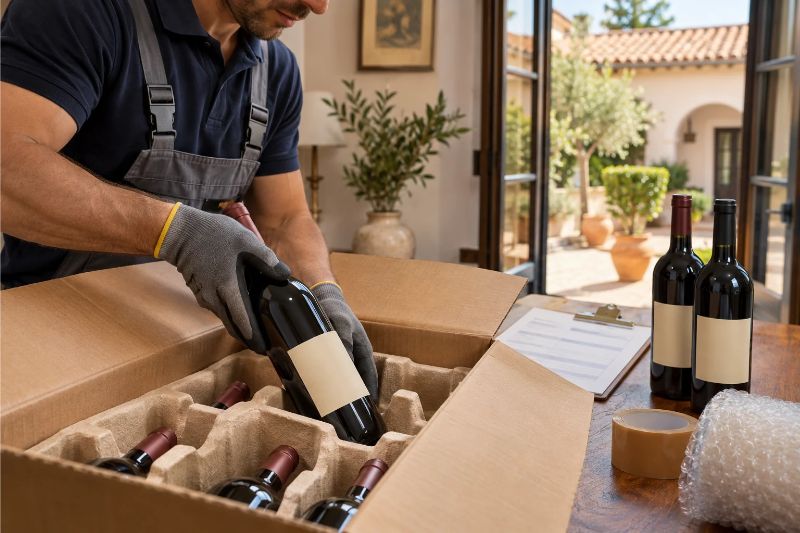
Customs checks for prohibited and restricted items, wood packaging material compliance, and a detailed inventory. Items like alcohol, tobacco, weapons, and certain electronics require special permits or may be prohibited entirely, and household goods must be clean, free of soil or plant matter, and securely packaged.
Some goods can’t enter Spain at all, and others require permission. Certain foods, animal products, and counterfeit items are banned, medicines require prescriptions, and items like artwork or antiques may need export licenses from the country of origin. Our Spain import rules guide covers the full details.
Planning Your Packing Timeline
Packing for an international move isn’t something you can rush through during the last week before shipping day. Starting early gives you the breathing room to stay organized, make smart decisions, and avoid costly mistakes.
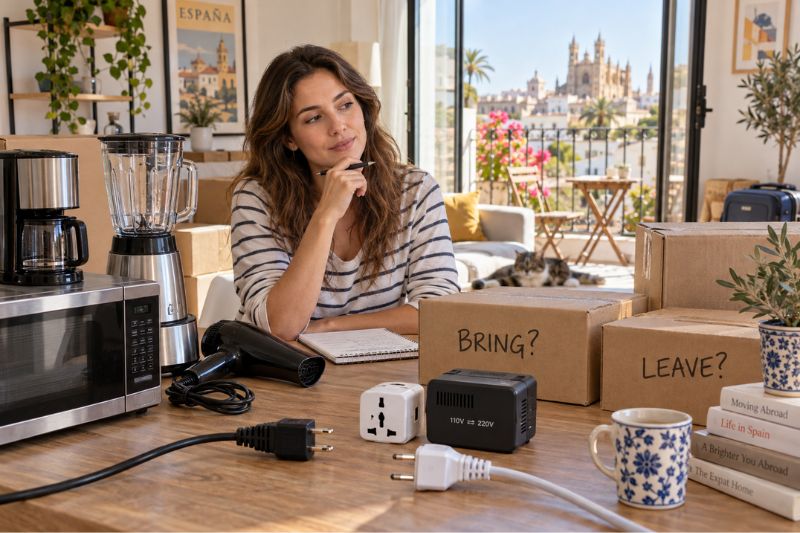
We generally recommend beginning two to three months before your move date. That gives you time to tackle packing in manageable stages rather than an overwhelming last-minute scramble, and it leaves room to declutter first, since shipping internationally is priced by volume, so the fewer items you ship, the more you save and the easier it is to settle into your new home.
One detail worth planning for early: essential documents like passports, visas, medical records, and moving contracts should travel with you personally, not inside your shipping container. It sounds obvious, but it’s one of the more common last-minute scrambles we see.
Choosing the Right Packing Materials
Your packing materials are just as important as the way you pack. Spain has strict rules about wood packaging materials due to pest control measures.
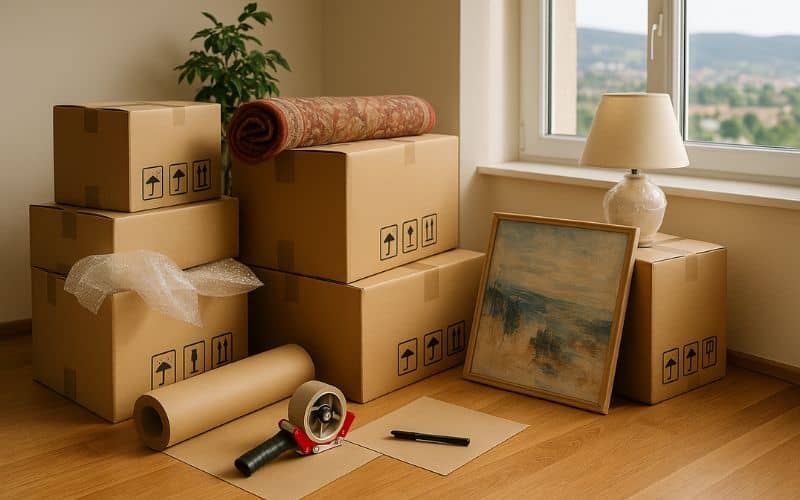
We use ISPM-15 certified wooden crates and sturdy, double-walled cardboard boxes that stand up to the rigors of international transport, with plastic wrap, bubble cushioning, and high-quality tape to secure and protect your items against shifting and impact. Any untreated wood packaging will be rejected at Spanish ports, which is why we ensure every crate or pallet we use is heat-treated and certified. Our professional packing team sources only compliant materials, saving you the headache of re-packing overseas.
Packing Strategies by Item Type and Climate
The way you pack varies depending on the type of item. Furniture is disassembled where possible and wrapped with protective blankets or foam padding, and appliances are cleaned, drained, and secured to prevent movement. Fragile items like glassware, artwork, and antiques require extra care, glass is wrapped in cushioning, artwork is placed in custom crates, and antiques are padded with shock-absorbing materials, high-value shipments are worth reviewing with our artwork shipping team specifically. Clothing and personal items should go in moisture-resistant containers, vacuum sealing can save space, but breathable garment bags may be better for delicate fabrics.
Spain’s climate also varies dramatically, from the sunny, humid coast to the cooler, drier interior, and protecting items from these changes starts during packing. In humid climates like Barcelona or Valencia, moisture absorbers inside boxes help prevent mold and mildew. For drier inland destinations like Madrid, extra padding can protect wooden furniture from cracking. Your shipment also passes through multiple climate zones during transit, so it’s worth using materials that can handle temperature swings, especially for electronics, artwork, and leather goods.
Creating a Customs-Ready Inventory
A thorough, well-organized inventory isn’t just a nice-to-have, it’s your ticket to faster customs clearance and fewer headaches. Spanish customs officers rely on your inventory to understand exactly what’s in your shipment, assess whether any items are restricted or require special permits, and determine if your goods qualify for duty exemptions. When your inventory is detailed, accurate, and matches what’s in your shipment, the inspection process is often quick and uneventful. When it’s vague or incomplete, delays are almost guaranteed.
Every box, crate, or container in your shipment should be clearly numbered and labeled with its contents, and the numbering system should match your master inventory list exactly, so if Box #14 says “Kitchen, ceramic plates, stainless steel cutlery, glass cups” on the inventory, that’s exactly what customs should find when they open it. Avoid generic terms like “kitchen stuff” or “personal items,” since these invite additional inspection and can slow down the process. We recommend including the room destination on each label too, “Living Room, sofa cushions” or “Bedroom 2, winter coats,” which not only helps customs but also makes unpacking in Spain far more efficient.
Taking photos of each box’s contents before sealing it serves two purposes: it provides proof of condition in case you need to make an insurance claim, and it gives customs officials visual confirmation of what you’ve listed in your paperwork, especially useful for higher-value or unusual items. We integrate this step into our process, our team photographs packed items as part of preparing your Spain customs forms, ensuring the visual records are linked directly to your inventory list, and we store a digital copy so if customs requests an additional review, we can send it instantly without delaying your shipment.
By combining precise labeling, thorough documentation, and visual proof, you set yourself up for a much smoother customs experience and reduce the risk of your belongings being held up at the port.
Frequently Asked Questions
How far in advance should I start packing for a move to Spain?
Two to three months is a good starting point. It gives you time to declutter, gather packing materials, and prepare a detailed inventory without rushing through the final weeks before your shipment departs.
What items are prohibited from entering Spain?
Certain foods, animal products, weapons, and counterfeit items are banned outright, and items like medicines require prescriptions while artwork or antiques may need export licenses. Household goods also need to be clean and free of soil or plant matter to pass inspection.
Why does wood packaging need special certification?
Spain enforces strict pest control measures on wood packaging, so any untreated wood, whether it’s a crate or a pallet, will be rejected at Spanish ports. ISPM-15 certified, heat-treated wood is required for any wooden packaging entering the country.
Should I pack important documents with my shipment or carry them myself?
Carry them yourself. Passports, visas, medical records, and moving contracts should travel with you personally rather than in the shipping container, since you’ll need quick access to them and don’t want them tied up in transit or customs review.
What makes an inventory “customs-ready”?
Specificity. Vague descriptions like “kitchen stuff” invite extra inspection, while detailed entries like “ceramic dinner plates, stainless steel cookware” that match your box labels exactly tend to clear faster. Photos of contents before sealing add another layer of documentation that helps with both customs and insurance.
Why Choose Our Professional Packing Services
Packing for Spain is more than just putting items in boxes, it’s about ensuring every piece of your shipment is protected, documented, and compliant with Spanish customs from the moment it leaves your home in the U.S. to the day it arrives at your new address in Spain. While anyone can buy packing tape and cardboard boxes, not everyone understands the standards and requirements that can make or break an international move.
Our team is specifically trained in Spain-compliant packing techniques, which means we know exactly how to prepare your belongings so they pass inspection without delays, avoid unnecessary repacking at the port, and arrive in the same condition you left them in. When you choose our professional packing services, you’re getting certified, Spain-compliant packing materials, from ISPM-15 certified wood crates to moisture-resistant wraps and double-walled cartons approved by Spanish and EU authorities, detailed, customs-ready inventories with every box labeled and every item documented, direct coordination with shipping and customs officials so paperwork is in the right hands at the right time, and secure storage in both the U.S. and Spain if your new home isn’t ready or you need to stagger deliveries.
In short, we replace stress with certainty. You won’t have to worry about whether your items meet Spain’s packing standards, whether your documents are in order, or whether your belongings will arrive intact.
Packing for an international move to Spain is one of the most important steps in your relocation. With the right materials, careful preparation, and expert help, as part of our full Spain moving services, you can ensure your belongings arrive safely and clear customs without issue.
Get a personalized packing quote today or call us at (844) 651-7050 to speak with a relocation specialist.