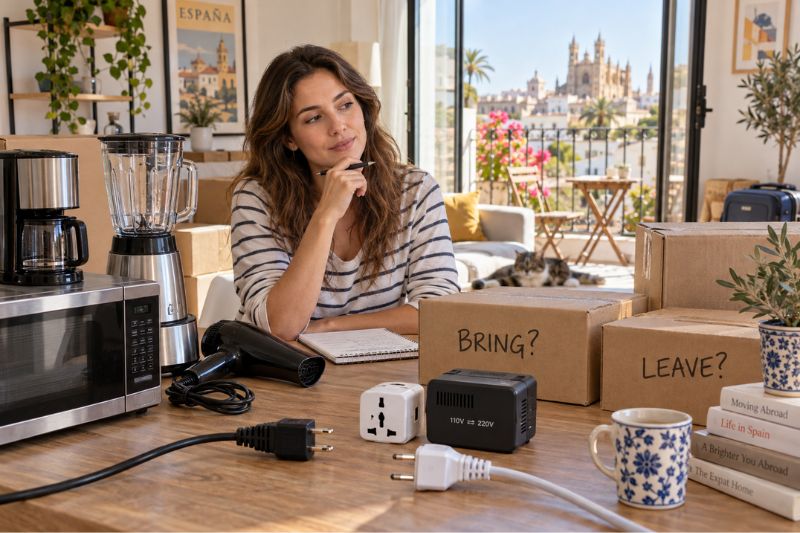
Why Many Americans Move Before Selling Their U.S. Home
For many Americans, relocating to Spain does not happen in one clean, perfectly timed sequence.
Life rarely works that way.
Instead of selling first and then moving, many people choose to relocate while still owning their property in the United States. Sometimes it’s intentional. Sometimes it’s strategic. And sometimes it’s simply because the Spanish opportunity came before the American sale.
If you’re planning a move from the U.S. to Spain, our international movers to Spain overview explains how the relocation process works from start to finish. But one of the biggest decisions happens before shipping ever begins:
Do you sell your home first, or move first?
There is no universal right answer.
For retirees, holding onto a U.S. home can feel like security during a major life transition. For mid-career professionals, it may serve as an investment property. For couples testing life in Spain, it can function as a safety net.
Moving without selling is not hesitation.
It is often risk management.
However, it changes how you approach your shipment, your storage decisions, and your financial planning.
Instead of relocating permanently in one phase, you’re navigating what many call a “two-home transition.”
That requires a slightly different mindset.
And in the next section, we’ll talk about how to evaluate the financial and emotional tradeoffs of keeping one foot in each country.
Financial Considerations and Risk Balance
Keeping your U.S. home while moving to Spain can feel comforting. It can also feel complicated.
The key is understanding what you’re really holding onto: security, investment, flexibility, or emotional reassurance.
Income, Expenses, and Currency Reality
When you maintain property in the United States, you’re managing two financial systems at once.
Mortgage payments, property taxes, insurance, and maintenance don’t pause just because you’re living abroad. At the same time, you’ll be establishing housing expenses in Spain, whether renting or purchasing.
That doesn’t automatically make the decision wrong. It simply means your move becomes a cash flow decision, not just a lifestyle one.
Some Americans rent their U.S. property to offset costs. Others leave it vacant during an adjustment period. Both approaches can work, but they require planning, not assumption.
Living in Spain while your primary asset remains in dollars also introduces currency awareness. Exchange rates fluctuate. That reality doesn’t need to create anxiety, but it should be acknowledged when projecting expenses.
Moving before selling works best when it’s intentional, not reactive.
Emotional Security vs Practical Strategy
For many retirees and mid-career couples, keeping a U.S. home isn’t about money alone.
It’s about having a fallback option.
Spain may be the dream, but holding onto property can make the leap feel less final. There is comfort in knowing you have something familiar waiting if plans change.
That said, clarity is powerful.
Ask yourself:
Are you keeping the home because it supports your long-term plan?
Or because letting go feels uncomfortable right now?
There’s no judgment in either answer. But understanding your motivation helps you build a relocation strategy that reflects reality rather than fear.
When you’re clear about the “why,” the logistics become easier.
What to Do With Your Belongings If You’re Unsure
A two-home transition changes how you think about your possessions.
If you haven’t sold your U.S. home, you may not be ready to ship everything. But you may not want to leave everything behind either.
This is where strategy replaces impulse.
Decide What Makes Spain Feel Like Home
Start by identifying the items that will immediately anchor your life in Spain.
Not everything.
Just the essentials that make a new space feel familiar and functional.
Quality bedroom furniture.
Personal décor.
Important documents.
Sentimental items that matter daily.
This first shipment is not about completeness. It’s about comfort and continuity.
Understanding how household goods shipping to Spain works can help you plan a shipment that reflects this phased approach rather than forcing an all-or-nothing move.
Shipping in stages is often more practical than trying to resolve every decision before departure.
Leave Space for Flexibility
When you haven’t sold your home yet, flexibility becomes your advantage.
You may choose to:
Ship core items now and return later for more. Place selected belongings into storage.
Leave certain rooms untouched until your long-term plans are clearer.
There is no requirement to make every decision at once. In fact, phased moves often feel calmer because they reduce pressure. The goal is not perfection. It is progress.
When your belongings reflect where you are emotionally and financially, your relocation feels aligned rather than rushed.
Shipping Household Goods in Phases
When you move to Spain without selling your U.S. home, your relocation rarely happens in a single shipment.
It becomes layered.
And that’s not a disadvantage. It’s flexibility.
Why Phased Shipping Often Makes Sense
If you’re keeping your American property, you may not want to empty it immediately. You might still be deciding whether Spain is permanent, seasonal, or exploratory.
In that case, shipping everything at once can create unnecessary pressure.
A phased approach allows you to:
• Send core household items first
• Evaluate your living space in Spain
• Return later for additional belongings
• Adjust based on how your lifestyle evolves
This approach aligns especially well with small-to-medium moves. Instead of treating the relocation as final, you treat it as progressive.
And progressive moves often feel more stable.
Your First Shipment Should Be Intentional
The first shipment sets the tone.
It should include what makes daily life in Spain feel grounded and complete, not everything you own.
Think in terms of functionality and emotional comfort:
The furniture that fits your Spanish apartment.
Personal pieces that create familiarity.
Items that would be costly or difficult to replace.
Understanding how household goods shipping to Spain works helps you structure this first phase properly. Shipment size influences flexibility, scheduling, and coordination. When you know your options, you can design a move that supports your timeline rather than forcing everything into one departure date.
Phased shipping reduces pressure.
And pressure is what usually leads to regret.
Storage Strategies That Make Sense During a Two-Home Transition
Storage often becomes part of the conversation when you haven’t sold your home yet.
The key is to use it strategically, not emotionally.
Temporary Storage as a Decision Buffer
If you’re uncertain about long-term plans, short-term storage can give you breathing room.
It allows you to:
• Clear space in your U.S. home for rental or staging
• Avoid rushing shipping decisions
• Reassess once you’ve lived in Spain for several months
Storage works best when it has a timeline attached. Open-ended storage often becomes expensive hesitation.
When used intentionally, however, it can make your transition feel controlled rather than chaotic.
If you’re evaluating this option, reviewing international storage services can help you understand how storage integrates into a broader relocation plan.
Avoid the “Freeze Everything” Mistake
One of the most common missteps in two-home transitions is freezing the entire household in place.
Rooms stay untouched. Decisions get postponed. Nothing moves forward.
That often creates stress later, especially if you eventually decide to sell.
Even if you’re keeping your home for now, consider partially downsizing or organizing it as if you were preparing for a future sale. This keeps your options open and prevents last-minute pressure.
Flexibility does not mean delay. It means staying prepared.
Common Mistakes in Two-Home Transitions
Moving to Spain while keeping your U.S. home offers flexibility.
But flexibility without structure can create confusion.
Trying to Live Fully in Both Places
One of the most common mistakes is attempting to preserve two complete households at once.
Keeping every room intact in the United States while trying to fully furnish a new life in Spain often leads to duplication, overspending, and emotional fatigue. Instead of feeling secure, you may feel split between two versions of home.
A healthier approach is to define the purpose of each property clearly. Is your U.S. home an investment? A safety net? A seasonal base? Once that role is defined, decisions become easier.
Clarity reduces tension.
Delaying Decisions Indefinitely
Another frequent issue is postponing everything.
No downsizing.
No organizing.
No partial planning.
Just waiting.
Waiting can feel safe, but it usually creates more pressure later, especially if you eventually decide to sell your U.S. home. Preparing early, even in small ways, keeps your options open and prevents a rushed transition.
Flexibility works best when paired with forward movement.
Over-Shipment “Just in Case”
Some movers try to compensate for uncertainty by shipping more than necessary.
It feels logical at the time. If you’re unsure whether Spain is permanent, bringing everything seems like protection.
But over-shipping often leads to clutter in a smaller space and unnecessary logistics.
A two-home transition benefits from restraint.
Bring what supports your daily life now. Leave room for adjustments later.
Building a Confident, Flexible Relocation Plan
A move to Spain without selling your U.S. home is not indecision.
It is often a thoughtful strategy.
The key is to design your relocation in phases rather than forcing finality where it doesn’t yet exist.
Phase 1: Establish Stability in Spain
Focus first on creating a comfortable, functional living space in your new city.
Ship the essentials. Secure housing. Adapt to your surroundings.
Give yourself time to experience daily life before making irreversible decisions.
This stage is about confidence, not completion.
Phase 2: Reassess With Clarity
After several months, your perspective shifts.
You’ll understand:
How much space you truly need.
Whether your U.S. property still fits your plan.
What belongings matter most long-term.
From that place of lived experience, decisions feel less emotional and more strategic.
Phase 3: Final Alignment
Whether you ultimately keep, rent, or sell your U.S. home, the goal is alignment.
Alignment between your finances.
Alignment between your lifestyle.
Alignment between your possessions and your priorities.
International moves don’t need to be rushed to be successful.
They need to be intentional.
Moving Forward With Confidence
Relocating to Spain while keeping your U.S. property is not a sign of hesitation.
It is often a reflection of wisdom.
You are giving yourself space to transition thoughtfully rather than abruptly.
And when you’re ready to coordinate shipping, storage, or a phased relocation plan, SDC International Shipping can guide every step, from professional packing to delivery coordination in Spain.
Ready to make your move? Let SDC International Shipping guide your journey to Spain, request your free quote today.