Updated August 2026
For many American couples, the idea of moving to Spain starts as a quiet daydream. Something whispered over coffee, or sparked by a vacation that felt too short. SDC International Shipping is a licensed FMC moving company that specializes in relocations from the USA to Spain, and we work with plenty of couples chasing exactly that daydream. You picture yourselves walking through cobblestone streets in the evening light, sharing a long lunch with nowhere to be, and wondering what it would actually take to make this your life. The thought lingers long after you return home, growing louder each time the U.S. rhythm of endless work and not enough time starts to wear thin.
Spain genuinely delivers on that feeling. The slower pace, the community, the sense that meals and relationships deserve real time, these aren’t travel brochure clichés. They’re what most American couples describe after their first year living there. Cities like Madrid and Barcelona offer cosmopolitan energy and world-class culture. Coastal areas like Valencia, Málaga, and Alicante promise year-round sunshine and a pace that encourages actually enjoying your surroundings. Smaller cities like Seville, Córdoba, and San Sebastián have become havens for couples who want culture and beauty without the scale of a capital city. The common thread is a lifestyle that makes room for connection in a way the American rhythm rarely does.
But moving abroad together is also one of the more complex things a couple can take on. It compresses dozens of major life changes into one season: country, language, financial structure, daily routine, and often identity. That creates pressure, even between partners who communicate well. The couples who navigate it most smoothly are usually the ones who do the relational groundwork before the logistical work begins. If you’re planning a move to Spain as a couple, this guide covers both.
Start with the Conversation Most Couples Skip
Before comparing apartments, researching neighborhoods, or discussing what to ship, it’s worth pausing for a more fundamental question: why Spain, and do you mean the same thing by that?
The answers often differ more than couples expect. One partner may be seeking lifestyle freedom, the sense of slowing down and reprioritizing. The other may be motivated by financial strategy, lower cost of living, or access to European healthcare. One may want adventure. The other may want stability with a warmer climate. None of these are incompatible, but if they aren’t discussed openly, they surface later in subtle ways that feel harder to resolve.
If one partner sees Spain as a permanent reinvention and the other views it as a flexible experiment, decisions about selling property, shipping belongings, or downsizing will feel emotionally uneven. Clarity prevents resentment. You don’t need identical answers. You need compatible expectations, and a shared understanding of what would make this move feel successful a year from now.
Some useful questions to work through together before the planning gets logistical: What are we hoping changes? What do we want to stay the same? What would each of us need to feel settled in the first six months? Are we open to returning if it doesn’t work, and does naming that possibility feel like relief or defeat? The answers to those questions shape everything downstream, from how much you ship to how you handle the hard weeks after arrival.
Divide Responsibilities Without Creating Imbalance
International relocation multiplies tasks quickly. Visa paperwork, housing research, budget planning, customs documentation, shipping coordination, downsizing decisions, it rarely falls evenly, and it rarely feels even when it isn’t discussed.
One partner begins researching residency requirements. The other starts sorting through belongings. Someone handles the banking questions. Someone books the flights. Before long, both people feel busy, but neither is sure the other understands how much they’re carrying. That imbalance, when it goes unspoken, creates friction that has nothing to do with Spain and everything to do with feeling unseen.
A more effective approach is to treat the move like a shared project with an actual task list. Sit down together, write out everything that needs to happen before departure, including the emotional tasks like conversations about what you’re leaving behind, and then divide them intentionally, not evenly. One partner may be better suited to research. The other may prefer logistics and scheduling. Alignment happens when both people feel ownership rather than obligation.
Check in with each other regularly as the move progresses. Not just on task completion, but on how you’re both feeling about the process. The person who seemed fine two weeks ago may be hitting a wall now. The one who was anxious early on may have found their footing. Keeping the emotional channel open alongside the task list is what separates couples who feel like a team through this from couples who feel like project managers operating on different floors.
On the shipping side specifically, understanding how household goods shipping to Spain works before one partner takes the lead on it prevents mismatched expectations about timelines, volume, and what happens at the Spanish end.
The Downsizing Conversation
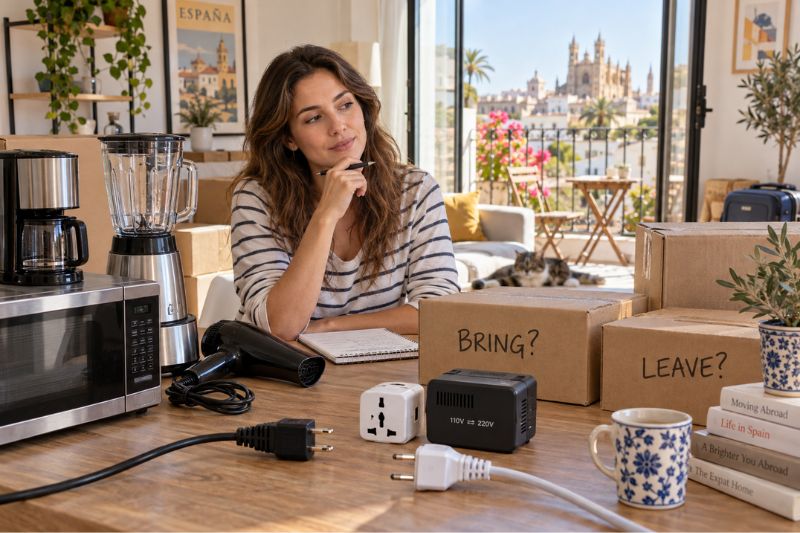
Few parts of an international move create more tension between partners than deciding what to ship and what to leave behind. Not because couples disagree about Spain. Because they often disagree about what security looks like.
For some people, security means lighter and simpler, the freedom of starting fresh with less. For others, it means familiar and preserved, bringing the dining table where holidays happened, the bookshelf collected over decades. Neither is wrong. They’re rooted in different ways of feeling settled.
When these values aren’t named, the downsizing process can feel like one partner is winning and the other is losing. A small reframe helps: instead of asking “do we need this?”, ask “does this serve our life in Spain?” That shifts the conversation away from emotion-versus-logic and toward shared purpose. Decisions feel more collaborative when they’re filtered through what you’re building rather than what you’re giving up.
Many couples also fall into an unspoken dynamic where one person naturally sees opportunity in starting fresh and the other sees belongings as anchors to something real. A dining table where holidays were hosted. A bookshelf collected over decades. A piece of art tied to a specific memory. If these attachments aren’t acknowledged, the sentimental partner ends up feeling like their past is being dismissed rather than carried forward. Naming the dynamic takes most of the charge out of it.
It also helps to establish categories together before touching a single item. What must ship. What can be replaced locally. What might go into short-term storage while you get settled. When those categories are agreed on in advance, individual decisions become less charged. If you need flexibility on timing, we offer secure storage in Spain for households that aren’t ready to receive their full shipment the moment they arrive.
Money Conversations You Need to Have Before You Go
Financial expectations have to be discussed openly before the move, not assumed. Spain may offer a lower cost of living in some categories, but it also introduces new variables: currency fluctuation, different tax considerations, a healthcare system that works differently from what Americans are used to, and property ownership rules that catch people off guard.
If one partner expects significant savings and the other anticipates similar expenses to what you had in the U.S., that gap quietly generates friction. Before departure, get aligned on the basics: what your income sources will be, whether you’re living on retirement income or working remotely, how large purchases will be decided, and who handles the budgeting day-to-day. These aren’t heavy conversations. They just need to happen before you’re standing in a Spanish grocery store having them for the first time.
Visa type also affects your financial picture. Couples living on passive income or savings typically apply for the Non-Lucrative Visa. Remote workers have the Digital Nomad Visa as an option. Property investors may qualify for the Golden Visa. Each has different income thresholds and requirements. Our Spain visa guide walks through the main options for Americans in plain terms.
One expense many couples don’t budget for upfront is a gestor, a Spanish administrative advisor who helps navigate tax filings, residency renewals, and bureaucratic paperwork. Most expats who try to manage Spain’s administrative system without one end up spending more in time and errors than the gestor’s fees would have cost. It’s a recurring expense worth building in from the start. Private health insurance, required for most visa applications, is another cost that surprises people when they see the annual total. Neither is a dealbreaker, but both belong in a realistic budget conversation before you go.
What This Move Actually Does to a Relationship
Even couples who communicate well will hit moments of friction during an international relocation. The goal isn’t to eliminate tension. It’s to recognize predictable stress patterns before they feel like relationship problems, and to see what’s usually waiting on the other side of them.
Timing pressure is one of the most common friction points. Visa deadlines, lease expirations, and shipping coordination can compress decision-making in ways that feel urgent to one partner and overwhelming to the other. When one person feels urgency and the other needs more time, frustration builds fast. The solution is a shared timeline built early, with regular check-ins, so that adjustments feel expected rather than destabilizing.
Decision fatigue is another. International moves require dozens of small calls, often in a short window. What to sell, what to ship, which neighborhood to prioritize, when to give notice. After enough of these, minor disagreements can feel heavier than they are. Recognize when exhaustion is driving the tension rather than actual incompatibility. Sometimes the right move is stepping away for a day.
And then there’s the fear that often goes unspoken: what if we don’t like it? What if we miss home? What if this changes us? Usually one partner voices these fears more openly while the other suppresses them to stay optimistic. Both responses are reasonable. What helps is leaving room for both, without requiring the more anxious partner to perform confidence they don’t feel yet.
What comes after that friction is usually the part couples don’t expect. Spain changes a relationship’s rhythm in ways that are hard to anticipate and harder to give up once you’ve had them. The day starts later, meals stretch longer, and the social texture of Spanish life, neighbors who actually talk to each other, plazas that fill up in the evening, a cultural expectation that dinner is a two-hour event, tends to pull couples out of the parallel-lives dynamic that’s easy to fall into back home.
Spanish apartments are typically smaller than American homes, which is an adjustment. But most couples find it simplifies rather than crowds. Less space means less to maintain, less to fill, and more reason to be out in the city rather than managing a house. The first few months will also include some genuinely frustrating bureaucratic experiences, setting up utilities, registering at the town hall, navigating the Spanish administrative pace. Facing these together, with some humor, tends to build rather than strain the relationship. The couples who struggle most are the ones who expected Spain to meet them where they were. The ones who thrive arrive curious, patient, and willing to let the country change them a little. That willingness is easier when you’re doing it alongside someone.
Frequently Asked Questions
Is it harder to move to Spain as a couple than alone?
It’s different rather than harder. Moving as a couple means coordinating two sets of expectations, finances, and emotional timelines instead of one, which adds complexity. But it also means shared support through the hardest parts, decisions don’t rest on one person alone, and most couples find that outweighs the added coordination.
What visa should a couple apply for when moving to Spain?
It depends on your income situation. Couples living on retirement income or savings typically apply for the Non-Lucrative Visa. Remote workers often qualify for the Digital Nomad Visa, and property investors may pursue the Golden Visa. Each has different income and documentation requirements, so it’s worth reviewing which fits your specific circumstances before applying.
Should couples ship all their belongings when moving to Spain?
Not necessarily. Many couples ship less than they expect, since Spanish apartments tend to run smaller and some items are easier to replace locally than to ship. A useful approach is agreeing together on what must ship, what can be replaced in Spain, and what might go into short-term storage while you settle in.
What’s the biggest source of tension for couples during an international move?
Unequal task load and unspoken expectations tend to cause more friction than the logistics themselves. When one partner feels like they’re carrying more of the planning without it being acknowledged, resentment builds quietly. Naming the workload out loud and dividing it intentionally, rather than letting it fall wherever it happens to land, prevents most of this.
How long does it take a couple to feel settled in Spain?
Most couples describe the first six months as the adjustment period, working through bureaucracy, building a routine, and finding their footing socially. By the one-year mark, most say the slower pace and social rhythm of Spanish life have become the new normal rather than something they’re still adjusting to.
How SDC Supports Couples Through the Logistics
SDC International Shipping specializes in relocations from the U.S. to Spain, and a significant portion of the households we work with are couples making this move together. We’ve seen what the stress points are, and we’ve built our process around removing as many of them as possible.
From your first consultation, we help you think through your shipment structure, whether a full container or groupage sea freight makes more sense for your volume, and how to sequence the packing and shipping timeline around your visa approval and housing situation. Our team coordinates customs documentation, manages the delivery at the Spanish end, and keeps you informed throughout so there are no surprises about timing or status.
If your shipment involves anything that needs extra care, artwork, a vehicle, specialty items, or if your timeline is complicated by housing or visa sequencing, we handle that coordination as part of the process. Moving insurance is available for full coverage from packing through delivery.
Most couples we work with tell us afterward that the move itself was smoother than they expected. Not because nothing went sideways, something always does, but because having a team manage the logistics meant they could focus on each other and the transition rather than chasing down freight updates or sorting out customs paperwork on their own.
For a full picture of what moving to Spain involves from a logistics standpoint, our international moving to Spain overview walks through the process end to end. When you’re ready to talk through your specific situation, call us at (844) 651-7050 or request a free quote to get started.
The couples who look back on this move most fondly are rarely the ones who had the smoothest logistics. They’re the ones who approached it as a shared act of courage, and who had enough support on the practical side to keep their attention on each other and the life they were building. That’s what we’re here to provide.