Why Healthcare Registration Matters for Expats
When you move to Spain, getting settled means more than unpacking boxes and exploring your new neighborhood. One of the most important steps in feeling secure and at home is registering for healthcare. For many Americans, this step can feel unfamiliar, but it’s the key to peace of mind in a new country where the healthcare system operates differently from what you’re used to in the United States.
Spain’s public healthcare system is one of the most respected in Europe, offering high-quality care that is widely accessible and affordable. For expats, especially those holding residency or long-term visas, registering with the system ensures that you can see doctors, visit hospitals, and receive prescriptions through your local centro de salud, or health center. Without this registration, you could find yourself paying out-of-pocket for care or facing long delays to access services.
It’s natural to feel uncertain about how it all works. The terminology, the paperwork, and even the process itself can seem confusing at first. But the truth is that registering for healthcare in Spain is a straightforward process once you know the steps. Understanding where to go, what to bring, and how to communicate with local officials can make all the difference.
When you work with SDC International Shipping, your move doesn’t end with the arrival of your shipment. Their relocation specialists help you plan for all the practical details that come after, including guidance on local registration processes like healthcare, banking, and utilities. Their goal is not just to move your belongings, but to make sure you start your new life in Spain with confidence and stability.
Understanding Spain’s Healthcare System as a New Resident
Before you begin the registration process, it helps to understand how Spain’s healthcare system is structured. Unlike in the U.S., where access to medical care often depends on private insurance, Spain operates a public system known as the Sistema Nacional de Salud (SNS). It is funded by taxes and provides comprehensive care to all residents, including foreigners who meet the eligibility requirements.
Once you have legal residency in Spain, through a visa such as the non-lucrative, work, or digital nomad visa, you may qualify for public healthcare. Most residents contribute to the system through employment or self-employment, which automatically includes healthcare coverage. Others, such as retirees or dependents, can register through Spain’s Convenio Especial, a low-cost monthly contribution that grants full access to the public system even if you don’t work locally.
Healthcare in Spain is regionally managed, meaning that each autonomous community, such as Andalusia, Catalonia, or Valencia, oversees its own network of hospitals and clinics. Registration therefore happens at your local level, not nationally. Once registered, you’ll receive a tarjeta sanitaria individual, or health card, which allows you to visit your assigned family doctor, schedule appointments, and access prescriptions at reduced prices.
For many Americans, this process feels refreshingly organized compared to navigating insurance networks in the U.S. Once you’re registered, there are no surprise bills or complex coverage tiers, you simply visit your doctor or clinic when needed. Still, it’s essential to understand the difference between public and private options. Many expats choose to combine public registration with a private policy for faster access to specialists or English-speaking doctors. You can explore more about visa types and healthcare eligibility through the Spain Visa Guide, which outlines how each visa connects to healthcare access.
The public system is efficient and affordable, but it does require proper documentation and timing. By learning how to register early, you ensure that your access to care starts as soon as your new life in Spain begins.
Step-by-Step Guide to Registering for Public Healthcare in Spain
Registering for healthcare in Spain is not complicated once you understand the process. It does, however, involve a few key steps that must be completed in the right order. Most new residents start the process within the first few weeks of arrival, once their residence paperwork is finalized. By following this sequence, you can avoid delays and ensure your access to Spain’s excellent public system begins smoothly.
Step 1: Get your NIE and residence card
The first requirement is having your Número de Identificación de Extranjero (NIE), the identification number assigned to all foreign residents in Spain. This number appears on your residence card, known as a TIE. You’ll need both before registering for healthcare. Your NIE proves your legal right to live in Spain and serves as your reference number for taxes, healthcare, and almost all official processes.
Step 2: Register your local address (padrón)
Next, visit your town hall to register your address on the padrón municipal, or local census. This certificate is known as the empadronamiento, and it is required for almost every administrative process, including healthcare. Bring your passport, rental contract, and proof of residency. You’ll receive a padrón certificate, which you will later present at your healthcare registration appointment.
Step 3: Obtain your social security number
If you are employed or self-employed in Spain, your employer or accountant will help you register with the social security system, which funds your healthcare access. If you are not working, you can still apply for a number through the Tesorería General de la Seguridad Social (TGSS), the national social security office. This number is used to link your healthcare record to your personal information.
Step 4: Register at your local health center
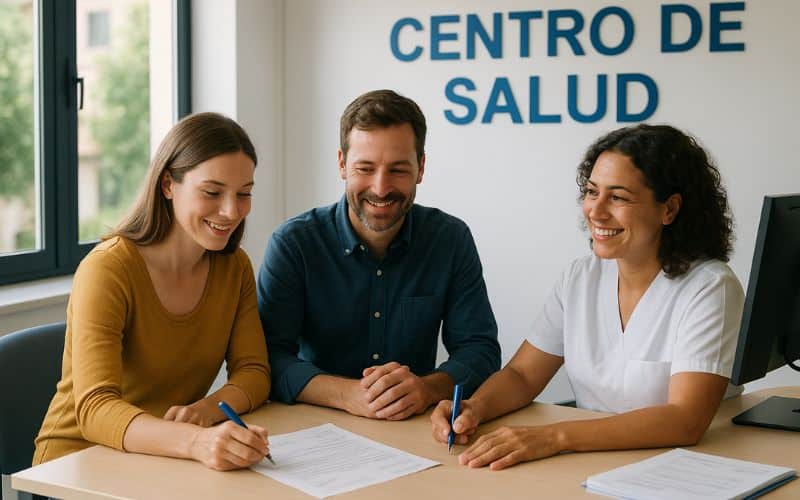
Once you have your NIE, padrón, and social security number, visit your centro de salud, or public health center, which serves your neighborhood. Bring copies of all your documents, along with proof of residence and a completed application form. After your registration is processed, you’ll be assigned a family doctor, or médico de cabecera, who becomes your main point of contact for care.
Step 5: Receive your health card
After registration, you’ll receive your tarjeta sanitaria individual, or health card. This card is your key to accessing care throughout Spain. You’ll use it when visiting doctors, filling prescriptions, or scheduling appointments.
For expats whose belongings or paperwork are still in transit, SDC International Shipping helps ensure that your move stays on track so you can focus on these important post-arrival details. Their Moving Services make it easier to transition into daily life in Spain, giving you the time and clarity to handle administrative steps like healthcare registration confidently.
Understanding Healthcare Culture in Spain
Once you’ve registered, it helps to understand how the Spanish approach to healthcare differs from what most Americans are used to. Spain’s healthcare system is grounded in accessibility and community. It’s designed to provide equal access to all residents, regardless of income or background, and that philosophy shapes the experience at every level.
The first major difference you’ll notice is that healthcare in Spain feels more personal and less transactional. In your local centro de salud, you’ll often see the same doctor over time, allowing you to build a relationship and continuity of care. Appointments are typically longer and less rushed than in the U.S., and preventive care, including regular checkups and screenings, is emphasized. The goal is to keep people healthy, not just treat illness when it appears.
You’ll also see a more structured referral process. In Spain, your assigned family doctor acts as the gatekeeper for most specialized care. You’ll visit them first for general issues, and if necessary, they’ll refer you to a specialist or hospital. While this may feel slower to some Americans, it ensures that care is coordinated and efficient. Many expats find it refreshing to have one doctor who knows their medical history and can guide them through the system.
Pharmacies in Spain are another pleasant surprise. Pharmacists are highly trained and approachable, often providing guidance that would typically require a doctor’s visit in the U.S. Most medications are available at a fraction of American prices, and prescriptions are electronically linked to your health card for convenience.
The cultural approach to wellness also feels different. Spaniards tend to see healthcare as part of everyday life, not a separate concern. Regular walks, balanced meals, and time spent socializing are viewed as essential to health. This lifestyle, combined with the country’s accessible healthcare, contributes to Spain’s reputation for longevity and well-being.
For Americans adjusting to life abroad, understanding these differences helps ease the transition. It allows you to appreciate the slower, more human approach that defines Spanish medical care, one that values your overall quality of life just as much as your physical health.
Common Mistakes Americans Make When Registering for Healthcare in Spain
Even though Spain’s healthcare registration process is fairly straightforward, many American expats encounter small challenges that can slow things down or create unnecessary frustration. Most of these mistakes come from differences in how the two countries handle paperwork, timing, and official communication. The good news is that with a little preparation and patience, you can avoid them entirely.
One of the most common mistakes is arriving without all the required documents. In Spain, almost every administrative task requires official copies, printed forms, and sometimes even certified translations. Forgetting your empadronamiento certificate, social security number, or residence card can delay your healthcare registration by weeks. It helps to bring multiple copies of everything and to keep your documents neatly organized in a folder. Spanish offices appreciate preparation, and being ready shows respect for their process.
Another mistake is assuming that healthcare registration is automatic. Unlike in the United States, where insurance coverage is often tied directly to employment, you must take the initiative to register yourself at your local health center in Spain. Even if you already have a residence visa, your access to care will not begin until you complete registration and receive your health card. Planning this step early ensures you have coverage from the moment you need it.
Expats also frequently misunderstand the difference between public and private care. Public healthcare covers most general and specialist services, but wait times for certain treatments can be longer. Many Americans choose to combine public access with private health insurance to enjoy faster appointments and English-speaking professionals. This hybrid approach offers the best of both worlds, giving you the affordability of the public system and the flexibility of private care.
Another avoidable issue involves communication barriers. While many doctors in Spain speak some English, administrative staff may not. Using a translation app or learning a few essential Spanish phrases can make your visits to the local clinic much smoother. A friendly attitude and patience go a long way, and Spanish people tend to respond warmly when you make an effort to speak their language, even imperfectly.
Finally, some expats make the mistake of focusing only on logistics instead of lifestyle. Moving abroad is not just about paperwork, it is about creating stability. Once you have registered for healthcare, take time to explore your local pharmacy, meet your assigned doctor, and learn how appointments work. These small steps will help you feel integrated faster and more at ease in your new community.
How SDC International Shipping Supports a Smooth Transition
Registering for healthcare may not seem directly related to international shipping, but anyone who has moved abroad knows how interconnected these details really are. A successful relocation depends on timing, coordination, and support, and that is exactly what SDC International Shipping provides for Americans starting their lives in Spain.
From your first conversation with an SDC relocation specialist, the goal is to make your move as organized and stress-free as possible. Their team manages every stage of the process, from professional packing and sea or air freight coordination to customs clearance and final delivery to your new home in Spain. With SDC handling the logistics, you can focus your time on important post-arrival steps like registering for healthcare, opening a bank account, or finalizing your visa paperwork.
Many expats underestimate how complex the timing of an international move can be. Your belongings might arrive weeks after you do, or your housing plans might change mid-move. SDC’s team plans around these realities, offering Secure Storage Options that give you flexibility if your home in Spain is not ready right away. Their specialists are also familiar with the local process of settling in, which means they can guide you through the practical steps of life after shipping, not just the move itself.
Another advantage of working with SDC is transparency. They communicate clearly about timelines, documentation, and what to expect at each stage. Whether you choose Sea Freight Shipping for your household goods or a faster air freight option for essentials, their coordination ensures that your relocation stays on schedule and free of surprises.
SDC’s mission goes beyond moving boxes, it is about helping you feel at home in Spain from the moment you arrive. Their comprehensive moving services make it possible to focus on your next chapter, confident that your relocation and your transition into daily Spanish life are in expert hands.
Start Your Healthier Life in Spain
Moving to Spain is more than a change of address, it is a chance to live in a country where well-being truly matters. Once you have registered for healthcare, your new life feels secure. You can go about your days knowing that if you ever need medical care, it is close, reliable, and affordable. For many Americans, that feeling of safety and peace of mind is one of the greatest rewards of making the move abroad.
Spain offers more than excellent hospitals and doctors, it offers a culture that values balance. Mornings begin with fresh air and a walk to the bakery, afternoons are for long meals shared with friends, and evenings are filled with conversation, not commutes. When you settle into this rhythm, you begin to understand why Spain consistently ranks among the healthiest countries in the world. Access to good healthcare is part of it, but so is the way people live.
As you build your new life here, each piece of the puzzle comes together. The apartment keys, the health card, the new friendships, all these details create stability and belonging. It is a process, but one that becomes easier when you have the right support behind you.
That is where SDC International Shipping comes in. From the first box packed in the United States to the moment you open your front door in Spain, SDC ensures that your move is organized, safe, and seamless. Their relocation specialists understand how the practical and emotional sides of moving are connected. While they handle the logistics, you can focus on settling in, exploring your new surroundings, and completing steps like healthcare registration with confidence.
Your new life in Spain begins with one simple choice: deciding that you deserve both adventure and peace of mind. Let SDC help you make that decision a reality.
Call (844) 651-7050 to speak with a relocation specialist or visit www.movertospain.com/get-a-quote/ to start planning your move today.