Spain has always been known for its warm climate, vibrant culture, and welcoming lifestyle, but for American families in 2025, it offers even more. Families considering a move abroad often worry about balancing career, children’s education, healthcare, and quality of life. Spain manages to check all of these boxes, often at a lower cost than the United States, while also adding the intangible benefit of living in a society that prioritizes community and family connection.
One of the biggest draws for families is affordability. While cities like Madrid and Barcelona carry higher housing costs than smaller towns, they remain more affordable compared to many major U.S. metro areas. Food, transportation, and healthcare are significantly less expensive, which stretches a family’s budget further. For parents planning for tuition, activities, or even saving for future goals, this cost difference can be life-changing.
Education is another decisive factor. Spain offers a mix of public schools, private schools, and international schools, many of which provide bilingual or English-language instruction. American families often choose international schools to help children transition smoothly, while others embrace the Spanish public school system to encourage language immersion and integration. With options across major cities and coastal towns, parents can select the educational path that best fits their children’s needs and family priorities.
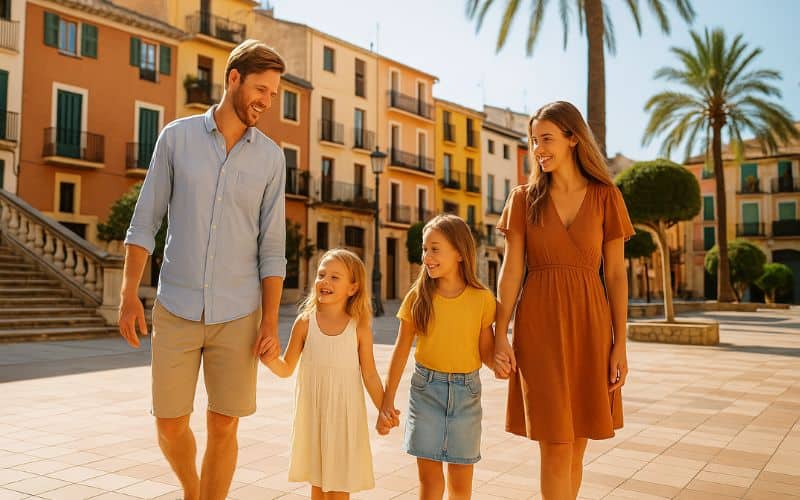
Beyond finances and education, Spain’s family-friendly culture makes it a comfortable place to raise children. Spaniards value time together, and you’ll see families filling plazas late into the evening, with children playing freely while parents enjoy a coffee or glass of wine. Safety levels in most Spanish cities are high compared to the U.S., and neighborhoods are designed around walkability, parks, and public squares where families gather. The slower pace of life, particularly outside the biggest metros, helps families reconnect with one another while adapting to a new culture.
In 2025, Spain continues to invest in family infrastructure. Public transit systems in major cities are expanding, making commuting easier for parents and giving older children safe, affordable ways to move around the city. Healthcare remains one of the most affordable and accessible in Europe, and private coverage is available at a fraction of U.S. costs for those who want to ensure access while establishing residency. Combined with Spain’s Mediterranean climate, which allows for year-round outdoor activity, families find themselves with more opportunities to spend time together in healthy, active ways.
Of course, moving with children also comes with practical challenges. School enrollment timelines vary, housing near good schools is competitive, and the logistics of an international move can feel daunting. This is where professional support makes all the difference. By coordinating Moving Services with school start dates, lease agreements, and visa appointments, families can reduce stress and arrive ready to focus on their new life.
For American families weighing their options, Spain presents an attractive balance: quality education, affordable living, strong healthcare, and a culture that values children. The choice then becomes which Spanish city fits your family’s lifestyle best — and that starts with Madrid.
Madrid for families, international schools, neighborhoods, housing choices
Madrid, Spain’s capital and largest city, is often the first stop for American families relocating abroad. It combines the convenience of a major European hub with neighborhoods that feel surprisingly local and family-friendly. While its fast pace and size can feel daunting at first, families quickly discover that Madrid offers excellent schools, safe and diverse neighborhoods, and countless opportunities for children to thrive.
One of the strongest draws is education. Madrid is home to a wide network of international schools, many of which follow American, British, or International Baccalaureate (IB) curricula. Institutions like the American School of Madrid, International College Spain, and King’s College provide bilingual or English-language instruction, ensuring that children transition smoothly into their new environment without falling behind academically. Tuition varies, but many families find it comparable to private schools in the U.S., often with smaller class sizes and more cultural exposure.
For families who want their children fully immersed in Spanish culture, public schools are also an option. Many are bilingual in Spanish and English, while some offer instruction in French or German. Public schools are free, and while the enrollment process can be bureaucratic, families who commit to it often find that their children gain language skills quickly and integrate into local communities with ease.
Neighborhood choice is critical. Areas like Chamartín and Chamberí appeal to expats for their proximity to international schools, safe streets, and abundance of parks. Retiro, known for the famous El Retiro Park, offers families green space in the heart of the city, while suburbs like Pozuelo de Alarcón and Aravaca provide larger homes, gardens, and quieter lifestyles, all within easy commuting distance to the city center. Housing in Madrid ranges from modern apartments to townhouses and villas in the outskirts, allowing families to match their budget and space requirements with their lifestyle preferences.
Culturally, Madrid is a paradise for families. Museums such as the Prado and Reina Sofía offer family-friendly programs, while the city’s parks and plazas become gathering spaces where children can play safely. Public transport makes moving around the city simple, and older children can often travel independently by metro or bus. Families also benefit from the city’s central location, with weekend trips to mountains, historic towns, and other regions of Spain just a short train ride away.
From a moving perspective, Madrid’s size presents both opportunities and challenges. Larger apartments and suburban homes make Sea Freight Shipping an option for full households, while families who prefer to phase their move may rely on Groupage Shipping to Spain for essentials first, storing the rest with Secure Storage until housing is finalized. Families bringing heirlooms, art, or instruments often add Moving Insurance or specialty services like Ship Artwork to Spain for peace of mind.
The bottom line is that Madrid offers American families the infrastructure, education, and cultural opportunities they need, wrapped in a vibrant and international setting. While the city is large and bustling, its neighborhoods are designed for daily family life, making it one of the most practical and enriching destinations for expats with children.
Barcelona for families, bilingual education, cultural opportunities, and lifestyle
Barcelona is often seen as Spain’s most cosmopolitan city, and for families, it offers an engaging mix of education, culture, and lifestyle. While it shares similarities with Madrid, Barcelona feels more compact and coastal, making it easier to navigate with children while also giving families access to beaches and outdoor spaces that shape daily life.
One of Barcelona’s strongest assets for expat families is its bilingual environment. As the capital of Catalonia, the local language is Catalan, and children in public schools are educated in both Spanish and Catalan. For families who want a truly immersive experience, enrolling children in local schools offers exposure to two languages simultaneously. Younger kids, in particular, adapt quickly and often become fluent within months. However, international schools provide an alternative for families who prefer English-based education or who want continuity with U.S. or British curricula. Schools such as the American School of Barcelona, Benjamin Franklin International School, and St. Peter’s School are highly regarded and cater to expats from around the world.
Neighborhood choice plays a big role in shaping the family experience. Les Corts and Sarrià-Sant Gervasi are popular among families because they combine residential calm with good schools and green spaces. Sarrià, in particular, feels like a village within the city, with narrow streets, parks, and community-oriented living. For those who want beach access, Poblenou offers a more modern, family-friendly neighborhood with new housing developments and a slower pace compared to the bustling Gothic Quarter or El Raval.
Barcelona’s cultural opportunities are unmatched. Families can explore world-class museums like the Picasso Museum or enjoy the whimsical architecture of Antoni Gaudí at Parc Güell and La Sagrada Família. Outdoor activities are abundant, from afternoons on the beach to hikes in the nearby Collserola hills. Festivals and cultural events, such as La Mercè, fill the city with performances and parades that families can enjoy together. For parents balancing careers and family life, Barcelona provides both the stimulation of a global city and the laid-back rhythm of Mediterranean living.
Practical considerations include housing and cost of living. Apartments in Barcelona are smaller than in suburban areas of Madrid, and prices are high in central neighborhoods. Many families choose to rent rather than buy, at least initially, as the housing market can be competitive. Daily costs such as groceries and dining are affordable compared to the U.S., but higher than in smaller Spanish cities. For healthcare, Barcelona offers both excellent public hospitals and private clinics, making it easy for families to access care as soon as they arrive.
From a moving logistics standpoint, Barcelona’s dense city streets can pose challenges for deliveries, especially in older neighborhoods with narrow roads and limited parking. Families often choose Groupage Shipping to Spain for essentials, then rely on Secure Storage while searching for housing. Those settling in more suburban-style neighborhoods like Sarrià or Poblenou can consider Sea Freight Shipping for full households. Professional Packing Services help navigate compact deliveries into apartments while ensuring that fragile items arrive intact.
For families seeking an international city with beaches, culture, and excellent schools, Barcelona delivers. It does require adjusting to smaller living spaces and the bilingual Catalan-Spanish environment, but for many, those challenges become part of the rich, rewarding experience of raising children in one of Europe’s most iconic cities.
Valencia and Málaga, family-friendly coastal living
For American families who want a slower pace of life, more affordable housing, and year-round sunshine, Valencia and Málaga stand out as two of Spain’s best family-friendly cities. Both offer access to the Mediterranean coast, excellent schools, and a lifestyle that emphasizes outdoor living — without the higher price tags of Madrid and Barcelona.
Valencia, Spain’s third-largest city, is famous for its family-oriented design. The Turia Gardens, a sprawling park built in a former riverbed, runs through the heart of the city and provides miles of space for biking, walking, and playgrounds. Families often gather here daily, making it a social hub for children and parents alike. Valencia also has strong educational options, including international schools like Cambridge House and the American School of Valencia, as well as bilingual public schools. Housing is more affordable than in Madrid or Barcelona, and families can often find larger apartments or even houses within walking distance of schools and parks. The city’s size strikes a balance — large enough to offer cultural richness but small enough to remain manageable for families.
Málaga, on the Costa del Sol, offers a different but equally appealing lifestyle. With its Mediterranean climate, long beaches, and welcoming atmosphere, Málaga has become a favorite for expat families seeking sun and relaxation. International schools such as St. George’s and the British School of Málaga provide options for English-language education, while public and private schools serve families who want local integration. Málaga is also a gateway to coastal living, with weekend trips to Marbella, Nerja, and other nearby towns providing endless opportunities for family adventures.
Both Valencia and Málaga are known for affordability. Housing costs are significantly lower than in Madrid or Barcelona, allowing families to rent or buy larger homes with outdoor space. Groceries and dining are also less expensive, and the slower pace of life means less stress and more family time. Healthcare facilities in both cities are modern and accessible, with hospitals and private clinics available for residents.
The coastal lifestyle shapes daily routines. Families often spend afternoons at the beach, weekends exploring cultural festivals, or evenings in outdoor plazas where children play while parents socialize. Safety is high, and children enjoy more independence than in many U.S. cities, which parents often describe as one of the greatest benefits of moving.
From a moving perspective, both Valencia and Málaga are easier to navigate than Spain’s largest metros. Streets are wider, housing includes more storage, and direct deliveries are often possible. Families bringing a full household will find Sea Freight Shipping to be the most practical option. Those who want to ease into their new life can choose Groupage Shipping to Spain for essentials, adding Moving Insurance for peace of mind. Families still house-hunting often take advantage of Secure Storage until they finalize their new address.
Valencia and Málaga both embody what families often dream of when moving abroad: space, affordability, good schools, and a strong sense of community. For parents who want their children to grow up near the sea, surrounded by sunshine and cultural richness, these coastal cities offer one of the best family-friendly lifestyles in Spain.
Seville, Bilbao, San Sebastián, and Granada, smaller-city advantages for families
While Madrid and Barcelona often capture the spotlight, many American families discover that Spain’s mid-sized and smaller cities offer some of the best conditions for raising children. These cities are generally more affordable, less crowded, and strongly community-focused, with rich cultural traditions that make family life vibrant and rewarding.
Seville, in Andalusia, is one of the most charismatic cities in Spain. Families who settle here find themselves surrounded by history, flamenco, and festivals like Feria de Abril. While summers are hot, the city offers a family-friendly rhythm where life centers on plazas, parks, and neighborhood gatherings. Housing is more affordable than in Madrid or Barcelona, and international schools such as St. Mary’s or Yago School provide English-language options. Families who embrace the Spanish way of life quickly adapt to later mealtimes, outdoor evenings, and a slower pace that emphasizes connection.
Bilbao, in the Basque Country, presents a very different but equally appealing option. Known for its modern transformation anchored by the Guggenheim Museum, Bilbao offers high-quality public services, excellent safety, and a walkable city center. Families here often highlight the balance of urban amenities with access to nature, since the surrounding green hills and northern coastline are perfect for outdoor adventures. International schools, like American School of Bilbao, provide continuity for expat families, while public schools help children integrate and pick up Spanish (and sometimes Basque). The cost of living is lower than in Spain’s largest cities, though families should expect cooler, wetter weather.
Nearby San Sebastián is famous for its beaches and cuisine, and it consistently ranks as one of Spain’s most livable cities. While housing costs are higher than in Bilbao due to its desirability, many families are drawn to its safe streets, excellent healthcare, and high-quality schools. Children can grow up just steps from the sea, and the city’s pedestrian-friendly design makes daily life convenient and enjoyable. Expats often describe San Sebastián as offering one of the best family lifestyles in Spain, albeit at a premium price.
Granada, in Andalusia, offers yet another model for family life. Housing here is among the most affordable in Spain, making it possible for families to rent or buy spacious homes close to the city center. The presence of the University of Granada gives the city a youthful energy, while the Alhambra and Moorish neighborhoods provide daily cultural enrichment. Families appreciate the access to both beaches and the Sierra Nevada mountains, making it possible to ski in the morning and swim in the afternoon. While Granada’s international school scene is smaller than in Madrid or Barcelona, options like the Granada College International School serve expat needs.
These smaller cities share common advantages for families: affordability, strong community ties, and easy access to culture and nature. They may not have as many international school choices as Madrid or Barcelona, but for families seeking a deeper integration into Spanish life, they offer a rewarding and manageable environment.
Education in Spain explained: public, private, and international schools
For families moving to Spain, education is often the deciding factor in choosing where to live. Understanding how the system works helps parents make informed decisions about the right path for their children.
Spain’s public schools (colegios públicos) are tuition-free and widely available across the country. They are funded by the government and follow the national curriculum, which emphasizes Spanish language, history, and culture. In Catalonia and the Basque Country, additional languages such as Catalan or Basque are part of daily instruction. For American families who want their children to fully integrate and become fluent in Spanish, public schools are a natural option. The main challenges are navigating enrollment bureaucracy and ensuring children adapt to a new language environment, but younger students often thrive in this setting.
Private schools (colegios privados) are tuition-based and vary in quality and focus. Some are bilingual, while others specialize in religious or alternative teaching methods. Fees are generally lower than in the United States, but they can still represent a significant part of a family budget. Many Spanish families choose private schools to ensure smaller class sizes or specialized programs.
International schools are often the preferred choice for expat families, especially in the first years after a move. These schools follow foreign curricula, such as the American, British, or International Baccalaureate systems, and many offer instruction in English or bilingual English-Spanish. They are particularly valuable for older children who may find it difficult to adapt to a new language immediately, or for families who expect to move internationally again in the future. International schools exist in most major cities and many mid-sized cities, but availability can be limited in smaller towns. Tuition is similar to private schools in the U.S., though often slightly lower, and spots can be competitive, it is wise to apply early.
One unique aspect of Spanish education is the strong emphasis on community and extracurricular life. Schools often serve as social centers for families, hosting cultural events, festivals, and sports that help children make friends and parents connect with local networks. For American expats, these opportunities can accelerate integration and make the transition smoother.
Another point to consider is the academic calendar. Spain follows a September-to-June school year, with long summer breaks and additional holidays tied to regional festivals. Families moving from the U.S. need to account for this in their relocation timeline, especially if arriving mid-year.
Overall, Spain’s education system provides multiple pathways for expat families, from immersion in local culture through public schools to continuity with familiar curricula in international schools. The choice depends on your children’s ages, language abilities, and long-term plans, but every path offers opportunities for growth and cultural enrichment.
Moving logistics for families, shipping, housing, and settling in
Relocating a family to Spain means balancing practical logistics with emotional transitions. Children may be excited about the adventure but also nervous about leaving friends behind, while parents juggle school applications, housing, and the move itself. Having a structured plan makes the difference between a stressful transition and a smooth arrival.
The first step is aligning your move with school enrollment and housing. Many international schools in Spain have fixed admission cycles, so it is wise to secure spots before confirming a shipping date. Housing searches often take longer than expected, especially in popular neighborhoods, so families sometimes move into temporary rentals while waiting for a long-term lease. In these cases, shipping only essentials first and placing the rest in storage can help reduce stress.
Shipping decisions depend on the size of your household and how quickly you need to settle. Families moving entire homes often choose sea freight, which provides the most space at the best value, though it takes several weeks in transit. Others prefer to ship part of their belongings initially, keeping the remainder on hold until housing is secured. Whatever approach you choose, planning ahead ensures your children have the familiar items they need — favorite toys, school supplies, or family keepsakes — as soon as they arrive.
Settling in Spain is also about building routines. Families who prioritize enrolling children in schools quickly, finding healthcare providers, and establishing new daily rhythms report smoother transitions. The first weeks in Spain are about more than unpacking boxes — they are about creating a sense of home, so children and parents alike can thrive in their new environment.
At SDC International Shipping, we guide families through every step. From timing shipments to match school calendars to protecting fragile items with professional packing, we make sure your move is aligned with your family’s priorities. Start by exploring our full range of Moving Services, then take the next step with a Get a Quote to map your family’s relocation in detail. With the right plan, moving to Spain becomes less about logistics and more about building the life you came for.