You can read about Spain for months and still not know what an ordinary Tuesday there feels like. That gap, between the postcard and the actual day, is what most Americans quietly worry about, and it is a sensible thing to worry about.
SDC International Shipping is a licensed FMC moving company that specializes in relocations from the USA to Spain, and living in Spain as an American is the subject our clients bring up once the boxes are sorted. This guide covers what daily life really looks like: the schedule, healthcare, getting around, housing, paperwork, and the people. If you are still early in the process, our Spain relocation guide covers the move itself.
What Is Daily Life Like for Americans Living in Spain?
Daily life in Spain runs later, slower, and more socially than in most of the United States, and for most Americans the biggest adjustment is the clock, not the culture.
Living in Spain as an American means adapting to a later daily schedule, public systems for healthcare and schooling, walkable neighborhoods, and a culture that puts time with people ahead of efficiency. Almost none of it is difficult, but much of it works differently from what you know. Seeing the pattern before you arrive makes the first few months a lot gentler.
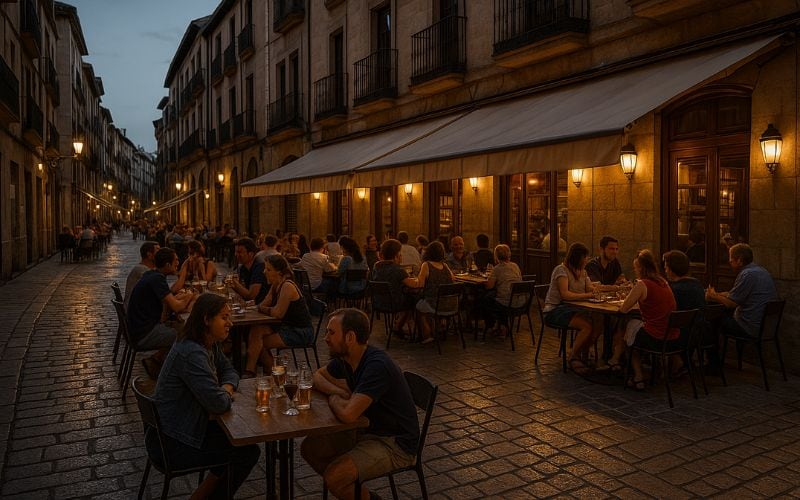
Lunch is the main meal, usually around two or three in the afternoon, and dinner often starts at nine or later, especially in Madrid and Seville. A restaurant that is packed at ten at night can be empty, or closed, at six. Plenty of new arrivals spend their first week hungry at the wrong hours and then quietly adopt the local rhythm by the second month.
The famous siesta is less a nap than a long midday pause. Supermarkets and large stores stay open, but many small shops in towns close for a few hours in the afternoon, and Sunday is quiet nearly everywhere. At the table, nobody hurries you. Servers will not bring the check until you ask, tipping means a few coins or a rounded-up bill, and a takeaway coffee is the exception, not the habit.
Is it frustrating at first? Sometimes. An errand that fails because the shop closed at two teaches you to plan around the pause instead of against it. Give the schedule a couple of months before you decide how you feel about it.
How Does Healthcare Work for Americans Living in Spain?
Healthcare in Spain is largely public and inexpensive to use, but whether you can use the public system depends on your visa and work status, not simply on living in the country.
If you work in Spain and pay into Social Security, you are covered by the public system much as a Spanish worker is. If you arrive on a visa that requires private health insurance, such as the Non-Lucrative Visa, you will carry a private plan first. Some residents later join the public system through a paid scheme called the convenio especial, but the conditions and timing vary, so confirm them with your regional health authority before you count on it. Medicare does not cover you in Spain, so plan for that gap before you leave.
Day to day, public care runs through a local health center, where you register and are assigned a family doctor. Primary care is quick and personal in most places. Waits for specialists vary by region, which is why plenty of expats keep a private plan for faster appointments and English-speaking doctors, even when they qualify for public care. Private plans usually cost noticeably less than American coverage, though premiums climb with age. Our guide to healthcare in Spain for expats walks through the options, and the Spain visa guide shows which insurance each visa expects.
Do You Need a Car to Live in Spain?
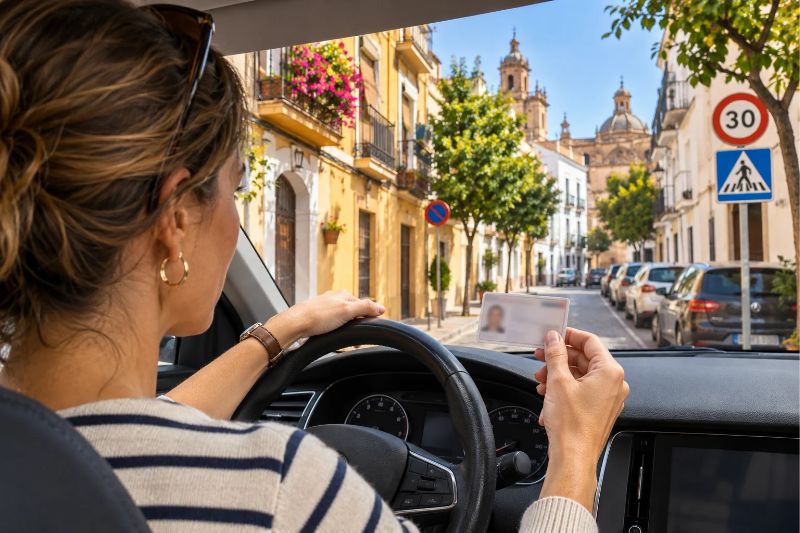
You do not need a car to live in most Spanish cities, and many Americans sell theirs before they leave and never miss it.
Madrid, Barcelona, Valencia, and Seville are built for walking, with metro or tram lines, frequent buses, and high-speed rail linking the major cities. Errands happen on foot, groceries come from the market down the street, and a weekend away means a train ticket instead of a rental car. Rural areas and many small towns are another story. Buses can be infrequent there, and a car stops being optional.
If you want to keep yours, it can travel to Spain, but only inside a container alongside your household goods, since SDC does not ship vehicles on their own. The car then goes through its own approval, homologation, and roadworthiness inspection steps once it arrives, so many people decide it is simpler to buy locally. Our car shipping to Spain page explains how a combined shipment works.
What Are Spanish Homes and Neighborhoods Like?
Most Americans in Spain live in apartments smaller than the home they left, in neighborhoods built around plazas, markets, and cafes instead of driveways and yards.
Expect compact kitchens, small elevators or none at all, and storage that is modest by American standards. Central heating and air conditioning are less common than at home, so a space heater in January and a fan in July are normal, and many households air-dry their laundry instead of using a dryer. The trade is a life that spills outdoors. Parks, promenades, and terraces do the work a backyard used to do.
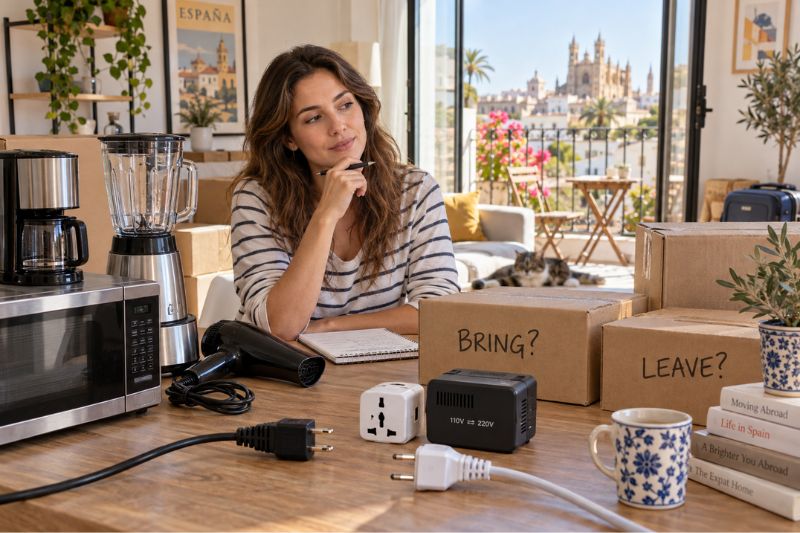
A smaller home rewards a lighter shipment. Which American appliances are worth moving at all comes up in nearly every client’s inventory, which is why we wrote about US appliances in Spain. For the furniture and keepsakes that do not fit your new place yet, secure storage in Spain buys you time to decide.
Where you settle changes nearly all of this, from rent to noise to how many flights of stairs you climb. Our comparison of the best places to live in Spain for Americans is a good next read if the city is still undecided.
How Does Spanish Bureaucracy Work for Newcomers?
Spanish bureaucracy is slower and more paper-heavy than most Americans expect, but it follows a predictable sequence once you know the steps and arrive with the right documents.
The early steps usually include registering your address at the town hall, known as empadronamiento, which unlocks other services, holding your NIE (the foreigner identification number), and collecting your residence card. Many offices work by appointment, called cita previa. Booking is often online, but you still show up in person with originals and photocopies, and a return trip because one paper was missing is so common that locals joke about it.
Rules and wait times differ by city and sometimes by office, so what worked for a friend in Valencia may not be quite right for you in Malaga. A gestor, a licensed professional who handles administrative paperwork for a fee, can take much of the weight off if you would rather not do it alone. Our guide to Spanish bureaucracy for expats covers the common hurdles in more detail. The system is less hostile than it feels in week one, because Spaniards stand in the same lines and fill out the same forms.
How Do Work, Schools, and Community Compare With the U.S.?
Work, school, and community in Spain all run on a more local, less hurried logic than in the United States, which many Americans find restful and a few find slow.
The standard legal limit for a full-time week is 40 hours, and employees receive about 22 working days of paid vacation a year on top of public holidays. Whether you can work at all depends on your visa. The Non-Lucrative Visa does not allow employment, for example, while the Digital Nomad Visa is built around remote work for non-Spanish employers and clients.
Public school tuition is free, schooling is compulsory from ages 6 to 16, and children who live in Spain are entitled to a place, though the paperwork varies by region. The language of instruction follows the region: Spanish in Madrid and Andalusia, but Catalan in Catalonia, Valencian in the Valencian Community, and Basque in the Basque Country. Families who prefer English often look at international schools in the larger cities, and our guide to Spain for families compares cities and schools.
Community is the part many Americans mention last and miss most. Neighbors greet each other in the stairwell, the baker knows your order after two visits, and local festivals fill the streets for days at a time. Friendships with Spaniards start more slowly than friendships with other expats, but they tend to run deep. Joining a class, a club, or a volunteer group speeds things up far more than waiting for an invitation.
Wherever you land, the move itself does not have to be the stressful part. Our step-by-step guide to moving from the U.S. to Spain shows how the pieces fit together. And if you would like to talk through your timing, your belongings, or what to leave behind, call us at (844) 651-7050. Start with whichever question is keeping you up at night.
Frequently Asked Questions
Is it hard for Americans to live in Spain?
It is manageable, and most of the difficulty comes from paperwork and language rather than daily life. Expect a learning curve with residency steps, appointment systems, and slow-moving offices. Americans who pick up some Spanish early, build a local routine, and give themselves a few months to settle in usually feel at home sooner than they expected.
Do you need to speak Spanish to live in Spain?
Not to get started, particularly in Madrid, Barcelona, and along the coast, where English is common in shops and services. Outside those areas, and for anything involving doctors, government offices, or neighbors, Spanish makes every day easier. Some regions also use a second official language, such as Catalan or Valencian, though Spanish works everywhere.
Do Americans get free healthcare in Spain?
Not automatically. Access to the public system depends on your visa and on whether you pay into Spanish Social Security, and many new residents start with private insurance, which some visas require. Medicare does not cover care in Spain. Check your visa’s insurance rules before you leave.
What time do people eat dinner in Spain?
Dinner usually starts around nine or ten at night, and lunch, the bigger meal, around two or three in the afternoon. Restaurants in tourist areas open earlier, but most local places stay quiet until evening. If you get hungry at six, a snack at a neighborhood bar will tide you over.
What do Americans find hardest about living in Spain?
Many newcomers point to slow paperwork, limited shop hours, and the lack of a quick fix when something goes wrong. Language and loneliness in the first few months come next. Both ease with a routine, a regular cafe, and a handful of local friends.
Can Americans work while living in Spain?
Only if your visa allows it. The Non-Lucrative Visa forbids working in Spain, the Digital Nomad Visa permits remote work for non-Spanish employers and clients, and employment-based visas cover the job they were issued for. Check what your visa permits before you accept any income in Spain.